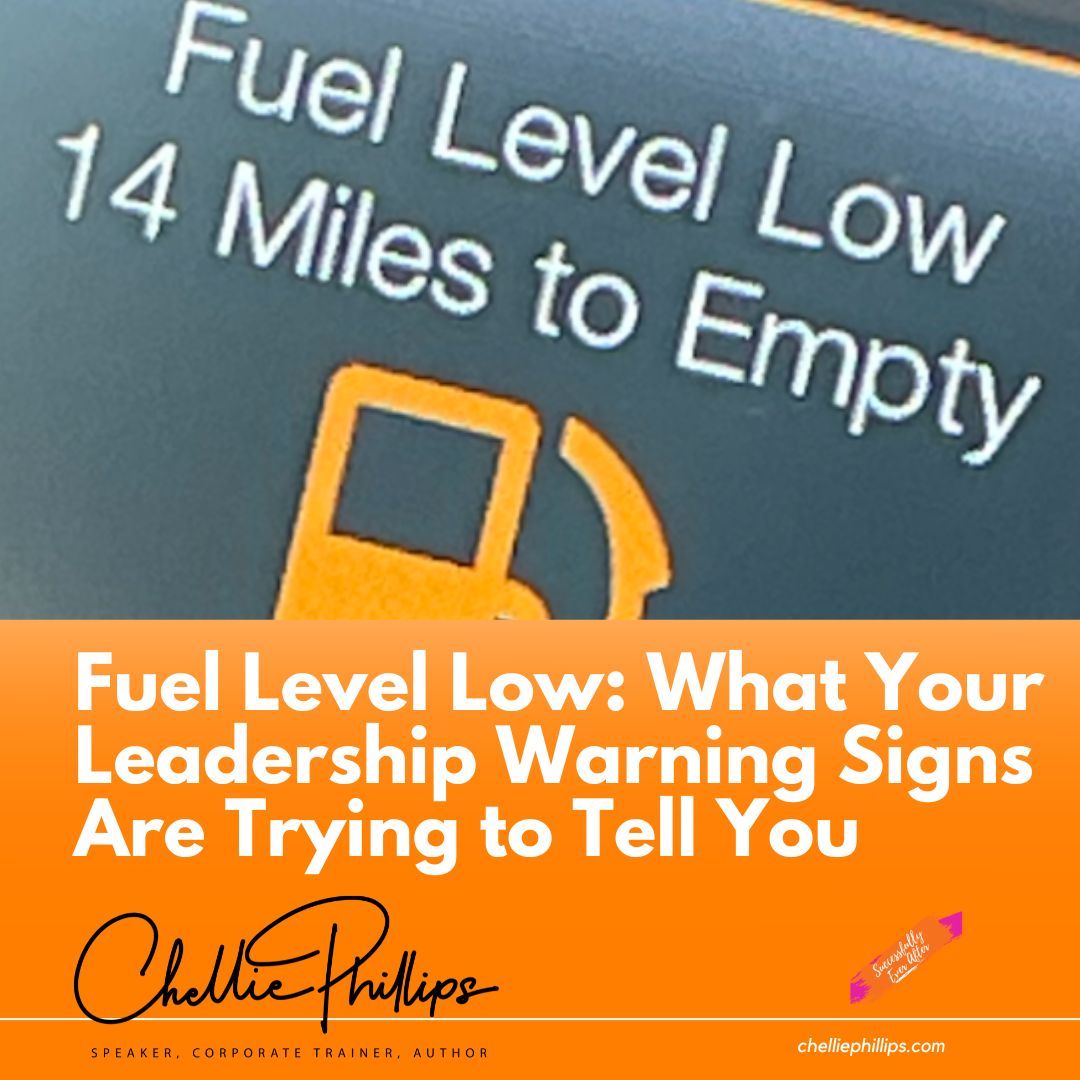

There’s a little light on my dashboard that’s been trying to get my attention.
At first, it was polite.
“50 miles to empty.”
No urgency. No pressure. Just information I could easily ignore.
Then, a little later…
“25 miles to empty.”
Still manageable. Still something I could push past.
And then—no more countdown. No more gentle reminders.
Just a steady, glowing truth:
Fuel Level Low.
Somewhere between telling myself “I’ll stop in just a minute” and actually pulling into a gas station, it hit me…
This is exactly how leadership burnout works.
It doesn’t show up all at once.
It starts quietly.
The Warning Signs Leaders Ignore
Before you ever feel completely drained, there are signals:
- You’re less patient than usual
- You’re moving faster through conversations instead of being present
- You’re checking tasks off your list instead of truly engaging
- You feel more reactive than intentional
- You’re less interested in your people—and the work
Nothing dramatic.
Nothing alarming.
Just… subtle shifts.
And like that dashboard light, they’re easy to dismiss.
“I’ll slow down next week.”
“Things will calm down after this project.”
“I just need to push through a little longer.”
Here’s the Truth: People Feel Your Fuel Level
You may think you’re hiding it well.
You’re still showing up.
Still getting things done.
Still checking the boxes.
But here’s what I’ve learned:
People may not see your dashboard…
…but they feel your fuel level.
They feel it in your tone.
In your attention.
In your ability to listen and lead well.
And when your tank is low, it shows up everywhere.
Refueling Isn’t Selfish—It’s Strategic
So many leaders treat rest like a reward.
Something to earn after the work is done.
But refueling isn’t optional—it’s essential.
Because you can’t consistently pour into others if you’re running on fumes.
The best leaders don’t wait until empty.
They refuel on purpose.
5 Ways to Refuel Before You Hit Empty
If you want to lead well consistently, refueling has to become part of your rhythm—not your recovery plan.
Here are five ways to start:
1. Pay attention to your signals
Your body, your mindset, and your behavior will tell you when something is off.
Don’t ignore it.
Awareness is your first step toward better leadership.
2. Protect your energy—not just your time
We talk a lot about time management.
But energy management is where leadership really lives.
Ask yourself regularly:
What fuels me—and what drains me?
Then adjust accordingly.
3. Build refueling into your routine
Don’t wait until you’re exhausted to rest.
That’s recovery.
Refueling is proactive.
Schedule time to think, learn, and step away—before you have to.
4. Surround yourself with the right people
Some people drain you.
Some people fuel you.
The right conversations can restore your focus, shift your mindset, and remind you why you do what you do.
Choose your circle wisely.
5. Reconnect with who you are outside of your role
You are more than your title.
Sometimes the fastest way to refuel is to step into something that has nothing to do with work.
The things you enjoy.
The things that bring you peace.
Because when you feel like yourself again—you lead like yourself again.
Don’t Wait Until the Light Stays On
Your leadership doesn’t fail overnight.
It fades when you ignore the signals for too long.
So consider this your reminder:
⛽ Pay attention
⛽ Refuel early
⛽ Lead with intention
Because the goal isn’t just to keep going.
It’s to lead well while you do.