
Don’t Ignore the Warning Signs
Grab your coffee. We’re going to the movies—and this time, we’re headed to Haddonfield. John Carpenter’s Halloween has all the ingredients of a classic horror movie: a quiet neighborhood, a masked figure who keeps appearing where he shouldn’t, and Dr. Loomis trying to convince people that the danger is real.
But beneath the suspense is a leadership lesson that feels familiar long after the jack-o’-lanterns are packed away: trouble rarely arrives without signals. The question is whether we’re paying attention.

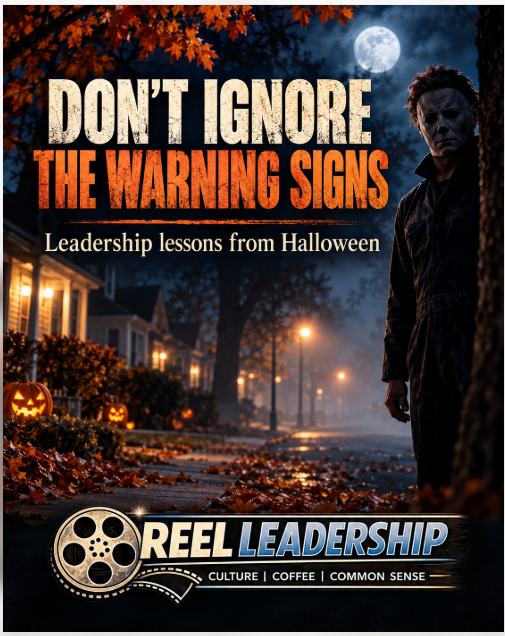
Michael from the Halloween series of movies.
In the workplace, the warning signs aren’t usually wearing a mask or carrying a knife. They may sound like an employee who keeps raising the same concern. They may show up as a safety shortcut, a customer complaint, a team that has stopped sharing ideas, or a process everyone knows is broken but nobody has time to fix.
Those signals deserve our attention before they become emergencies.
1. Listen to the person raising the alarm
Dr. Loomis spends much of the film trying to get others to understand the danger Michael Myers presents. People don’t respond with the urgency he believes the situation requires. Leaders face a quieter version of that moment all the time. Someone brings forward a concern, and it’s tempting to dismiss it because the person is frustrated, the issue seems small, or nothing bad has happened yet.
But the way a concern is delivered doesn’t tell us whether it’s worth hearing. A leader’s first job is to understand what’s underneath it. Ask questions before you explain the concern away: What happened? Who else is affected? Has this come up before? What would make it safer or easier to speak up next time?
People learn quickly whether raising a concern leads to curiosity—or a closed door.
2. Pay attention to the signals that seem small
Laurie sees Michael around Haddonfield before she knows what his presence means. In an organization, people also notice things before they can fully explain them. A team may sense that trust is slipping. A member may describe a confusing experience. An employee may stop volunteering ideas.
One signal may not tell the whole story. A pattern can.
That’s why leaders need to stay curious, especially when things appear to be going well. Past success can make it easy to assume a process still works, a team still feels connected, or a customer experience is still meeting expectations.
Try asking: What are we hearing repeatedly? What has become normal that shouldn’t be? What are people working around instead of telling us?
You don’t have to treat every small issue like a crisis. You do have to notice when the same signal keeps showing up.
3. Prepare before pressure arrives
When a crisis hits, people need more than a quick answer. They need to know who is responsible, where to find accurate information, how decisions will be made, and how they can help. That kind of readiness is built before the scary music starts. Leaders can prepare by practicing crisis communication, developing people who can step into new responsibilities, and making sure teams know how to raise concerns and get decisions made.
Preparation doesn’t mean predicting every possible problem. It means building habits and relationships that help people respond together when the unexpected happens. That’s culture work. The way people communicate on an ordinary Tuesday shapes how they’ll work together on the difficult one.
One Small Edit to Try
In your next team conversation, ask: “What’s one problem we’ve started working around instead of fixing?” Then listen without rushing to defend the current process. You may hear a warning sign while there’s still time to do something useful with it.
Coffee Conversation
- When has someone on your team raised a concern that deserved more attention?
- What small signal might your team be overlooking right now?
- What would help your people feel safe bringing you the truth early?
Good leaders don’t need to be frightened by every shadow. They do need to pay attention, take people seriously, and prepare their teams to respond. Because in leadership—as in Halloween—ignoring the warning signs rarely makes them disappear.
What movie should I put under the leadership lens next?
#ReelLeadership #Leadership #WorkplaceCulture #Communication #Halloween